When the idea for an album begins to take shape, I often don’t see myself coming. I move forward with two or three ideas in mind, and I am frequently surprised by what actually happens.
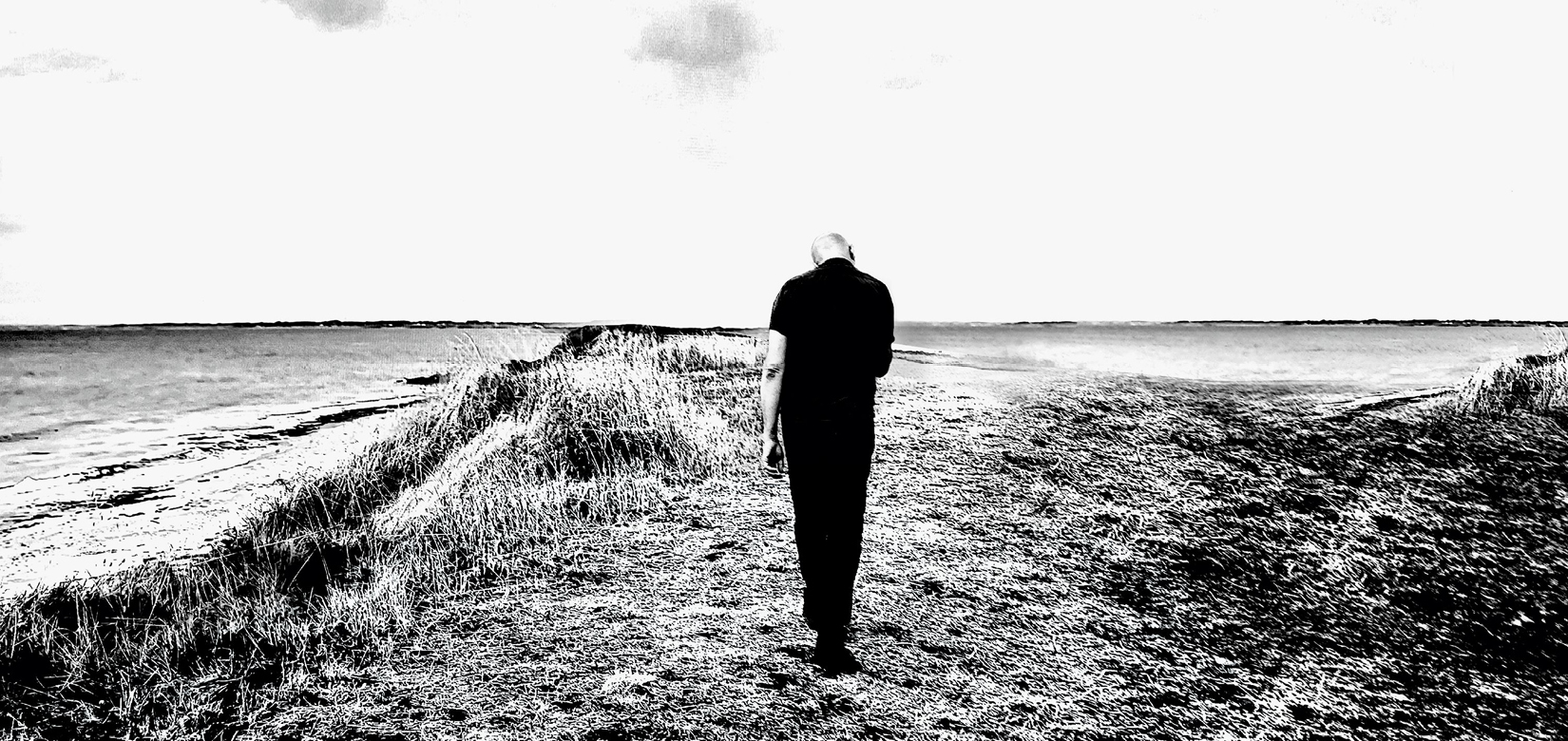
For “Spirales”, things started on a day in June 2024 during a stroll through my hometown of Provins, in the Seine-et-Marne region. I had just walked through a public park where I used to go often with my mother as a child. A text suddenly emerged, bringing those childhood walks and the exact moment I was living into a sudden collision.
I had already written songs about childhood, but the approach to the subject felt different here, less burdened with pathos. The resulting track, “La roue du Jardin Garnier”, thus set the tone for the entire record.
Until then, I had treated songwriting primarily as a fictional playground with very little autobiography; the previous studio album, “Le monde réel” (2022), spoke heavily about the times we live in, about ecology, and did so from a certain distance. That day in Provins, I realized I wanted to return “to the center of the game” by celebrating epiphanies experienced in the places of my youth. Provins, then, and Nantes, for the most part.
Provins, where friendships die hard: this is notably reflected in the songs “Un jour j’ai disparu” and “Évanoui”, where friendship resurfaces after decades of mutual silence. The same goes for “39 rue Sainte-Croix”, where a homecoming causes memories and reunions to intertwine.
Nantes, with the evocation in “Picasso y los Simios” of an era—the mid-1980s—through a cult band that remained local. Or with “Mark”, a tribute to Mark Long, the late singer of The Opposition, a band I idolized as a teenager, whom I got to know through a shared concert on a stage in Nantes.
Other places “cross through” the album’s songs, such as “La rue des Flandres”, where a wander through a northern town also takes on the character of an epiphany, attempting to transcribe the unfolding of a thought in real time; the same goes for “La brique orange”, which also stemmed from a night walk on a Normandy beach. Yet another epiphany, this time romantic, comes with “Apparaître sur le quai”, where the vision of the woman I love clears up a hitherto cluttered mental landscape.
Telling one’s own story does not mean the rest of the world ceases to exist. Thus, “Bromure” and “Coltan” emerged during the writing process—”topical” songs, the former about the virilism of power, and the latter about the price of our digital addictions. The personal and the universal also come together in “Shining à 12 ans”, an evocation of childhood trauma blended with a contemporary observation about screens.
And what about the music in all of this? In harmony with the lyrics, it is more earthy and embodied, featuring the return of the electric guitar to the forefront. Is this due to immersing myself back into my youth, re-listening to certain indie pop-rock records from the late 80s and early 90s? Undoubtedly. It is also a way to add a bit of edge and roughness to this introspection.
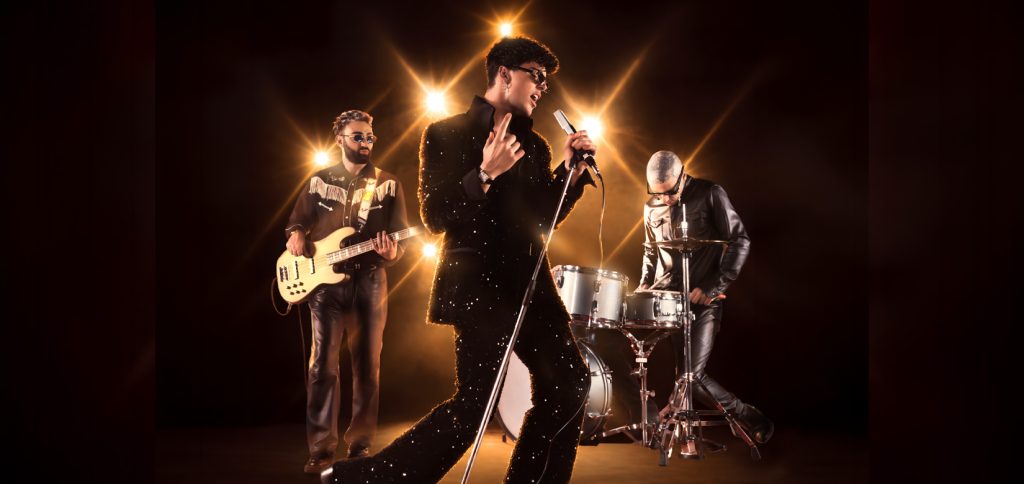
Being on a trio tour while writing also had an impact, strengthening the desire to infuse the recording with the intensity of a live performance: joining my two comrades Sébastien Boisseau (double bass) and Julien Noël (keyboards) was Étienne Bonhomme (drums)—all of whom were already present on the previous studio album. We arranged the songs together. I like to think that the convergence of our four musical worlds, with our diverse influences ranging from English and French new wave to contemporary jazz, from seventies pop to the motorik sound inherited from the 1970s German scene, infuses our shared sound. An organic sound, where the joy of playing and the refusal to digitally smooth everything over are defining factors.
To capture this sound, a return to my roots in the suburbs of Nantes felt logical given the initial project: Le Garage Hermétique, where 35 years earlier, I mixed my very first album, “La fossette”. The studio has expanded significantly since then, and it is now run by the highly talented Pierre Le Gac, who engineered all the tracking and mixing for the album.
In the track “La terre à personne”, there is mention of “spirals”. When the word came to me, it caught my attention. In geometry, in the singular, it refers to “a plane curve winding around a fixed point while moving farther away from it.” I thought to myself that this was a fitting metaphor for what goes on in songwriting. Even more so for songs centered on memories which, like any self-respecting memory, love to slip away.